Recognition and differential diagnosis
CRS can present as a mild flu-like illness to multi-organ failure. Signs and symptoms can mimic tumour lysis syndrome or sepsis and treatment with broad spectrum antimicrobials, paracetamol and intravenous fluids is required to cover possible concurrent infection.
At onset of fever, and before starting CRS specific treatments, take appropriate cultures and start empirical antibiotic therapy until infection can be ruled out.
Treatments for CRS are immunosuppressive and can exacerbate severe active infection. This must be considered in all patients presenting with CRS symptoms.
Complications of CRS
Potential life-threatening complications of CRS include:
- cardiac dysfunction
- acute respiratory distress syndrome
- neurological toxicity
- renal failure
- hepatic failure
- disseminated intravascular coagulation
Monitoring
Regularly monitor for signs and symptoms of CRS in CAR-T cell therapy in line with the individual product SmPC, and national service specification.
The key symptoms are:
- fever
- hypotension
- hypoxia
Temperature equal or above 38°C, which is not attributable to any other cause, is the distinguishing feature.
Management
The grade of CRS indicates the management and treatment plan. See Understanding acute CAR-T cell therapy toxicities in adults (SPS page) for more information on how CRS is graded.
CRS management includes tocilizumab, an anti-cytokine therapy, and corticosteroids. In severe and refractory cases, off-label treatments such as anakinra may be used in line with Trust formulary processes.
Temperature often normalises within a few hours after tocilizumab administration whereas the other symptoms of CRS take longer to resolve.
The patient is still considered to have CRS even in the absence of fever, until all signs and symptoms leading to the diagnosis of CRS have resolved.
Once patients have received paracetamol or anti-cytokine therapy, then fever is no longer required and the grading of CRS is driven by hypotension or hypoxia.
CRS treatment algorithm
The figure below outlines the CRS treatment algorithm.
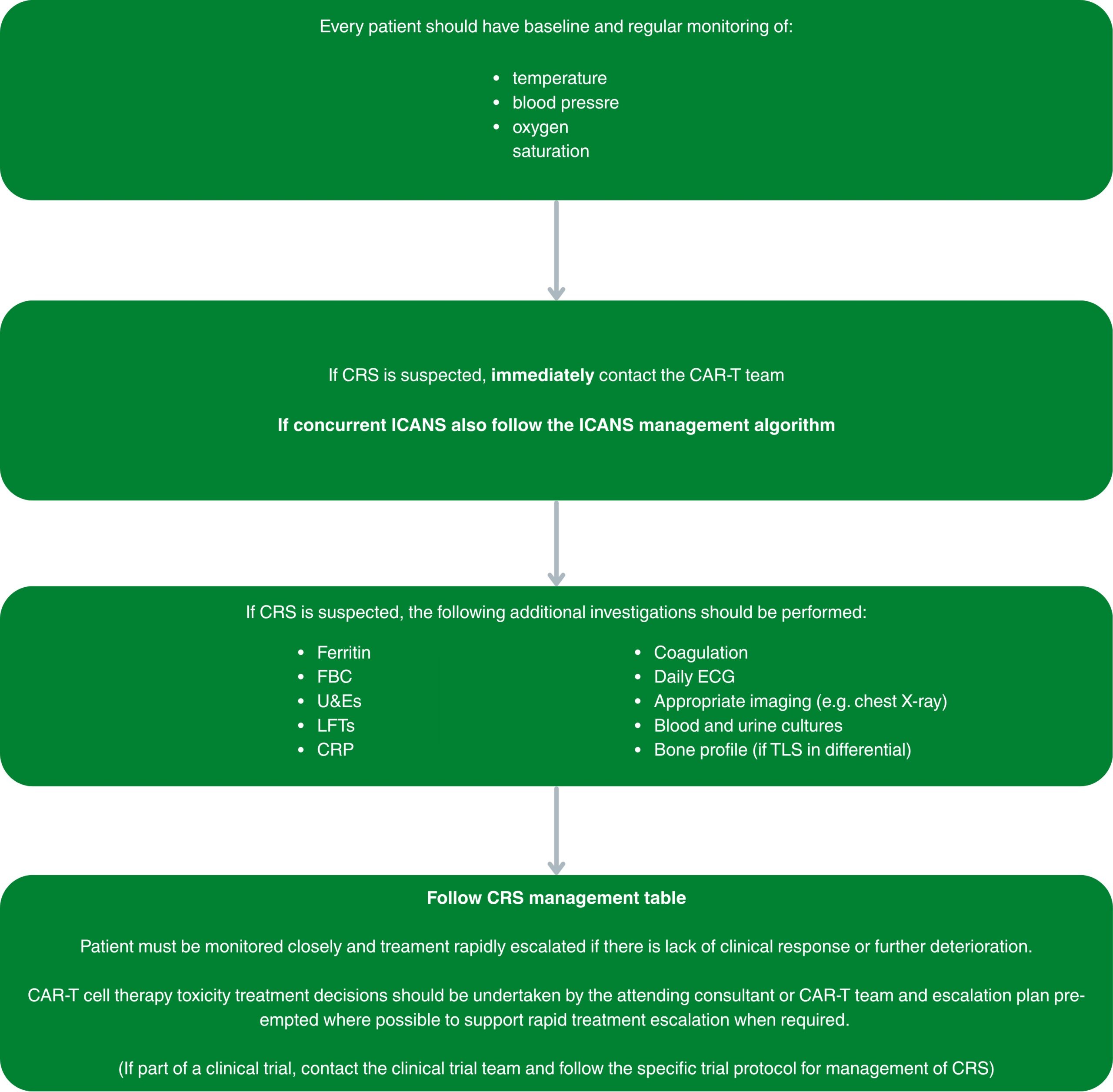
Management table for treatment of CRS
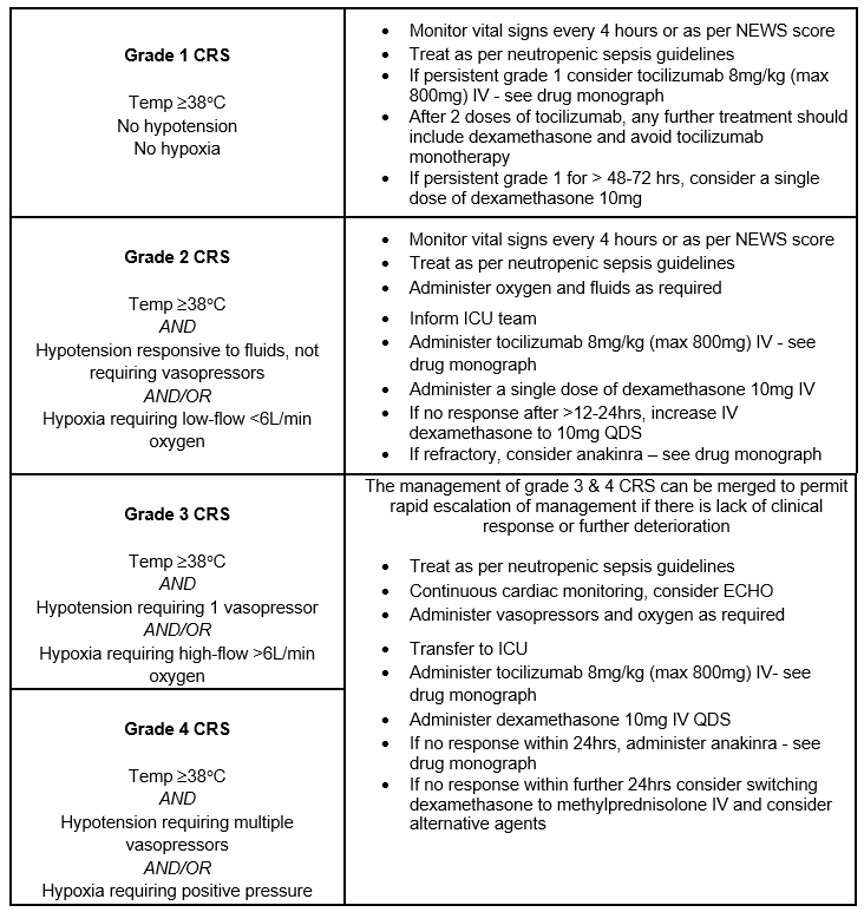
CRS treatment algorithm and management table
A printable version of the CRS treatment algorithm and management table.