Recognition and differential diagnosis
ICANS can present as:
- delirium
- delirium
- encephalopathy
- aphasia
- lethargy
- difficulty concentrating
- agitation
- tremor
- seizures
- rarely cerebral oedema
- headache
- changes in handwriting
ICANS normally lasts between 2 to 4 days but can persist for weeks.
The onset of neurotoxicity can coincide with CRS but can also occur as late as the third or fourth week following CAR-T cell therapy infusion, after CRS resolves.
Consider alternative causes of neurological dysfunction such as:
- infection
- opioid toxicity
- haemorrhage
- drugs
- electrolyte imbalance
- metabolic acidosis
Monitoring
Regularly monitor for signs and symptoms of ICANS in CAR-T cell therapy in line with the individual product SmPC, and national service specification.
Measure the immune effector cell-associated encephalopathy (ICE) score to assess for encephalopathy twice a day or more frequently if ICANS is suspected.
Management
The grade of ICANS indicates the management and treatment plan. See Understanding acute CAR-T cell therapy toxicities in adults (SPS page) for more information on how ICANS is graded.
ICANS management includes corticosteroids. In severe and refractory cases, off-label treatments such as anakinra may be used in line with Trust formulary processes.
Input from a neurologist and early transfer to ICU for monitoring is recommended.
Treat seizures with advice from the neurology team or in line with local guidelines. Consider seizure prophylaxis with non-sedating anti-seizure medication for patients with an increased risk of ICANS.
Management of ICANS should be rapidly escalated through the treatment algorithm if there is a lack of clinical response.
ICANS treatment algorithm
The figure below outlines the ICANS treatment algorithm.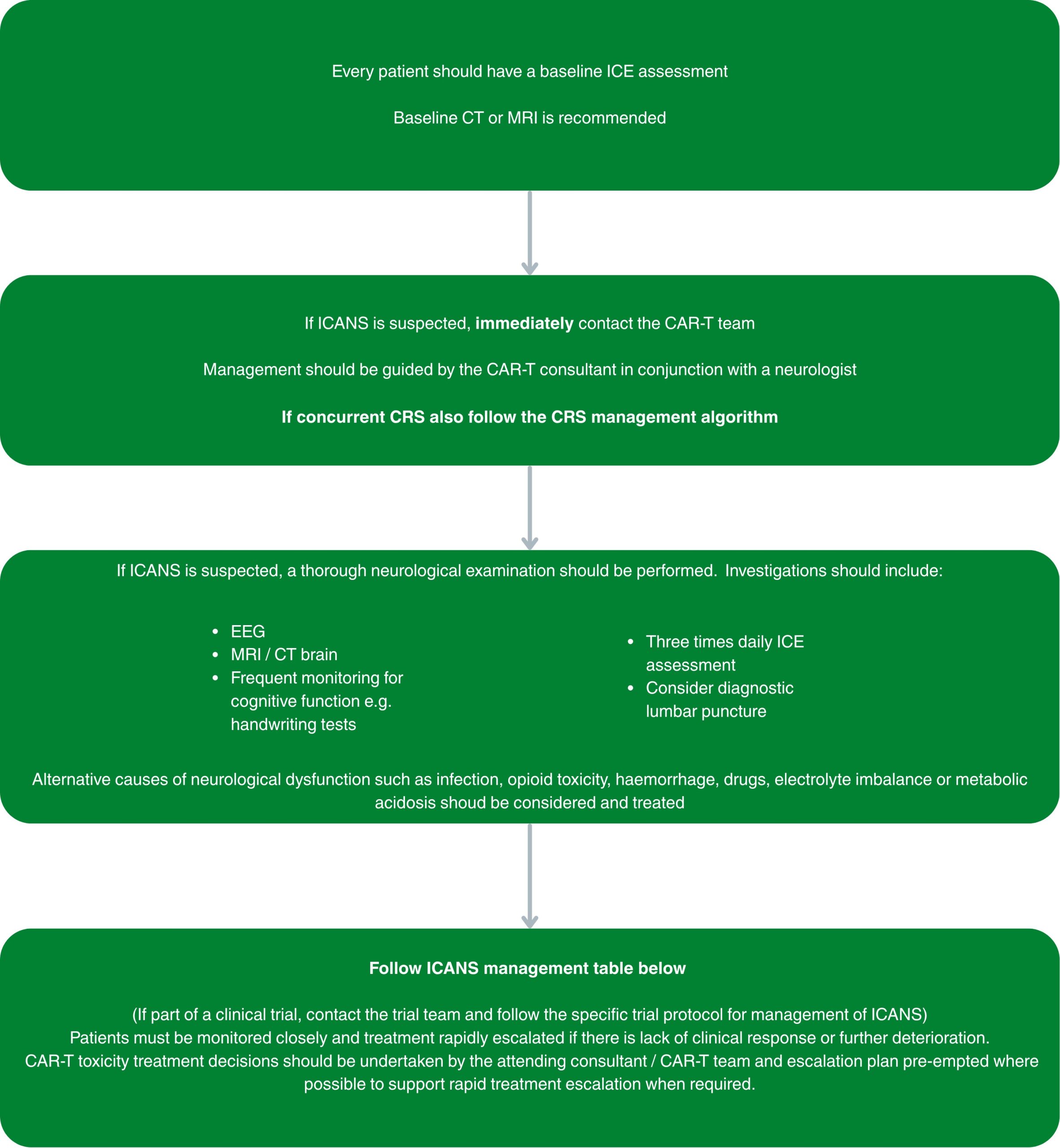
Management table for the treatment of ICANS
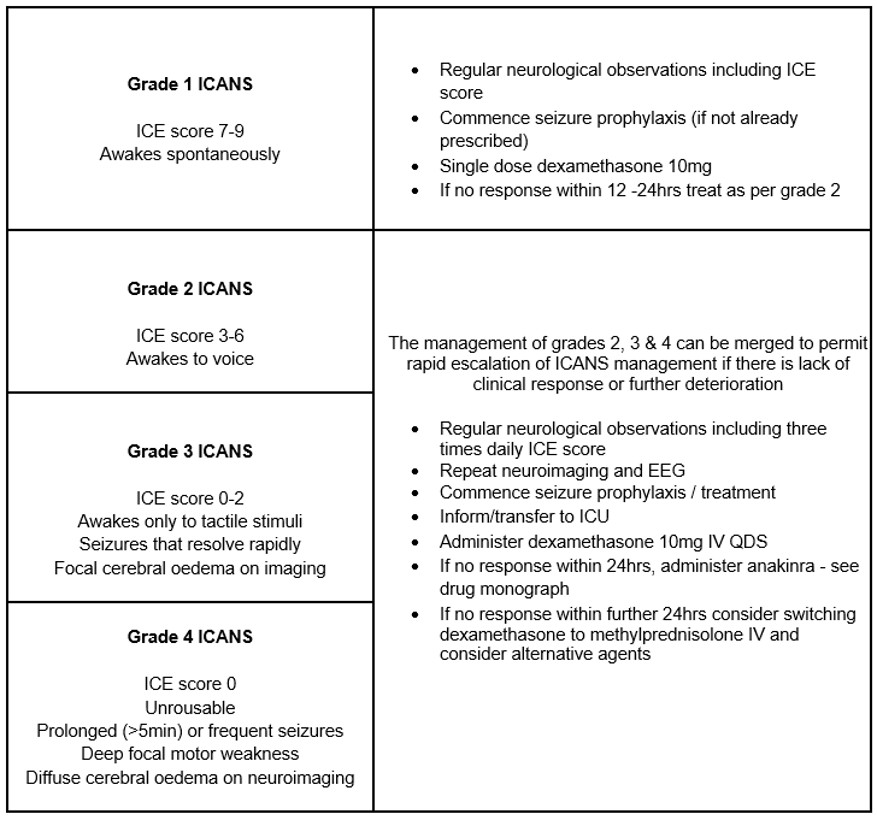
ICANS treatment algorithm and management table
A printable version of the ICANS treatment algorithm and management table.